---
title: "Accounts Receivable and Bad Debt"
sidebarTitle: "Accounts receivable"
description: "How receivables affect the income statement, the entries for A/R receipts, how to review an aging report, and PBI's treatment of bad debt."
icon: "file-invoice"
---
> **For AI agents:** the complete documentation index is at [llms.txt](/llms.txt). Append `.md` to any page URL for its markdown version.
| Field | Value |
|---|---|
| **Owner** | Unassigned — needs an owner |
| **Department** | General Accounting |
| **Effective date** | Not set in source |
| **Scope** | Accounts receivable concepts and entries, reviewing an A/R aging report, and PBI's bad debt treatment. Includes recommendations staff may pass to clients — flagged as manager-only. Does not cover managing collections, which is the client's responsibility. |
| **Source** | `General Accounting/05 - Receivables/Accounts Receivble.docx` |
Accounts receivable is the money owed to a business by its customers for goods or services delivered but not yet paid for.
When a company sells on credit it creates an account receivable entry (a debit) — a claim against its customers for payment. The amount owed is typically due within the credit terms or payment terms. Managing receivables effectively is essential to cash flow.
## How receivables affect the income statement
Receivables hit the income statement in two ways.
### Revenue recognition
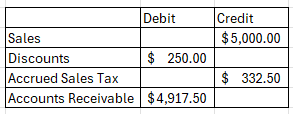
When a sale is made on credit, revenue is recognized **even though cash hasn't been received**. The amount recognized is based on the invoice issued to the customer, so receivables indirectly contribute to the revenue figure.
 ### Bad debt expense
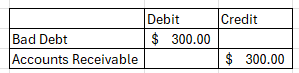
If a customer fails to pay an outstanding receivable, it may eventually be deemed uncollectible and written off as bad debt expense. This is recognized on the income statement as a reduction in revenue, reflecting the portion of sales expected to be uncollectible.
Bad debt expense is typically calculated from an estimate of the percentage of receivables expected to become uncollectible, based on historical trends, customer creditworthiness, and other factors.
### Bad debt expense
If a customer fails to pay an outstanding receivable, it may eventually be deemed uncollectible and written off as bad debt expense. This is recognized on the income statement as a reduction in revenue, reflecting the portion of sales expected to be uncollectible.
Bad debt expense is typically calculated from an estimate of the percentage of receivables expected to become uncollectible, based on historical trends, customer creditworthiness, and other factors.
 ## Recording A/R receipts
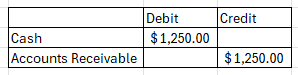
When a receivable is paid, two entries record the transaction:
| Entry | Effect |
|---|---|
| **Debit Cash** (or Bank Account) | Records the receipt of cash from the customer |
| **Credit Accounts Receivable** | Reduces the outstanding receivable owed by the customer |
If payment is made by a method other than cash — a bank transfer or credit card — the account credited may differ. A credit card payment credits the **credit card receivable** rather than cash.
## Recording A/R receipts
When a receivable is paid, two entries record the transaction:
| Entry | Effect |
|---|---|
| **Debit Cash** (or Bank Account) | Records the receipt of cash from the customer |
| **Credit Accounts Receivable** | Reduces the outstanding receivable owed by the customer |
If payment is made by a method other than cash — a bank transfer or credit card — the account credited may differ. A credit card payment credits the **credit card receivable** rather than cash.
 ## Reviewing the A/R aging report
The accounts receivable aging report categorizes outstanding balances by how long they have been outstanding. Its purpose is to identify which invoices are overdue and by how much.
Obtain the aging report from the accounting system.
For Sage Intacct, see [Run the A/R aging report in Intacct](/internal/how-to/accounting/intacct-ar-aging-report).
Examine the aging buckets — 0–30 days, 31–60 days, 61–90 days, over 90 days — to understand how long each invoice has been outstanding.
Focus on invoices past their due dates and categorize them by how long they have been outstanding.
Look for patterns: an increasing number of overdue invoices, or a concentration of balances in specific aging categories.
Inform clients of any concerning items found in the previous two steps. Discuss the possibility of a write-off for any accounts determined to be uncollectible.
**Expected outcome:** the client is aware of overdue concentrations and has made a decision on any accounts that appear uncollectible.
## Client recommendations
**Managers only.** The management of accounts receivable and the customer relationship is **the client's responsibility, not Profit Builders'**. The items below are suggestions a manager may offer — they are not services PBI performs.
- **Communicate with customers** — reach out to customers with overdue balances to remind them of outstanding invoices and ask about payment status.
- **Assess collection efforts** — evaluate whether current collection efforts are effective, and consider additional strategies such as reminder notices, phone calls, or payment plans.
- **Review credit policies** — assess whether credit policies need adjusting to prevent future delinquencies.
- **Take action** — develop a plan for addressing overdue invoices to minimize bad debts and optimize cash flow.
## Bad debt
Bad debt is money owed by customers that is unlikely to be paid, typically because the customer cannot or will not pay. When a customer fails to pay an outstanding invoice despite repeated collection attempts, the amount may eventually be deemed uncollectible and written off.
Bad debts arise for various reasons — customer financial difficulty, disputes over the quality or delivery of goods or services, or intentional default. Regardless of cause, bad debts are a loss that affects financial performance and cash flow.
Companies often set aside a **provision for doubtful debts** (an allowance for doubtful accounts) estimating the portion of receivables that may become uncollectible.
**PBI's standard procedure is to expense bad debts at the time they are determined to be uncollectible.** Record an allowance for doubtful accounts only when a client specifically requests it.
## Related documents
- [Run the A/R aging report in Intacct](/internal/how-to/accounting/intacct-ar-aging-report) — the report settings, filters, and columns
- [Financial analysis](/internal/sops/accounting/general/financial-analysis) — where A/R support is verified at period end
- [Sales journal entry](/internal/sops/accounting/general/sales-journal-entry) — credit sales recorded to A/R
## Reviewing the A/R aging report
The accounts receivable aging report categorizes outstanding balances by how long they have been outstanding. Its purpose is to identify which invoices are overdue and by how much.
Obtain the aging report from the accounting system.
For Sage Intacct, see [Run the A/R aging report in Intacct](/internal/how-to/accounting/intacct-ar-aging-report).
Examine the aging buckets — 0–30 days, 31–60 days, 61–90 days, over 90 days — to understand how long each invoice has been outstanding.
Focus on invoices past their due dates and categorize them by how long they have been outstanding.
Look for patterns: an increasing number of overdue invoices, or a concentration of balances in specific aging categories.
Inform clients of any concerning items found in the previous two steps. Discuss the possibility of a write-off for any accounts determined to be uncollectible.
**Expected outcome:** the client is aware of overdue concentrations and has made a decision on any accounts that appear uncollectible.
## Client recommendations
**Managers only.** The management of accounts receivable and the customer relationship is **the client's responsibility, not Profit Builders'**. The items below are suggestions a manager may offer — they are not services PBI performs.
- **Communicate with customers** — reach out to customers with overdue balances to remind them of outstanding invoices and ask about payment status.
- **Assess collection efforts** — evaluate whether current collection efforts are effective, and consider additional strategies such as reminder notices, phone calls, or payment plans.
- **Review credit policies** — assess whether credit policies need adjusting to prevent future delinquencies.
- **Take action** — develop a plan for addressing overdue invoices to minimize bad debts and optimize cash flow.
## Bad debt
Bad debt is money owed by customers that is unlikely to be paid, typically because the customer cannot or will not pay. When a customer fails to pay an outstanding invoice despite repeated collection attempts, the amount may eventually be deemed uncollectible and written off.
Bad debts arise for various reasons — customer financial difficulty, disputes over the quality or delivery of goods or services, or intentional default. Regardless of cause, bad debts are a loss that affects financial performance and cash flow.
Companies often set aside a **provision for doubtful debts** (an allowance for doubtful accounts) estimating the portion of receivables that may become uncollectible.
**PBI's standard procedure is to expense bad debts at the time they are determined to be uncollectible.** Record an allowance for doubtful accounts only when a client specifically requests it.
## Related documents
- [Run the A/R aging report in Intacct](/internal/how-to/accounting/intacct-ar-aging-report) — the report settings, filters, and columns
- [Financial analysis](/internal/sops/accounting/general/financial-analysis) — where A/R support is verified at period end
- [Sales journal entry](/internal/sops/accounting/general/sales-journal-entry) — credit sales recorded to A/R